
FANNIE AND FREDDIE MAKE IT HARDER AND EASIER FOR FLORIDA CONDOS
Find out how Fannie and Freddie's new rules impact Florida condos. Discover how Fannie and Freddie make financing easier yet more demanding.

By Eric M. Glazer
· 3 min read
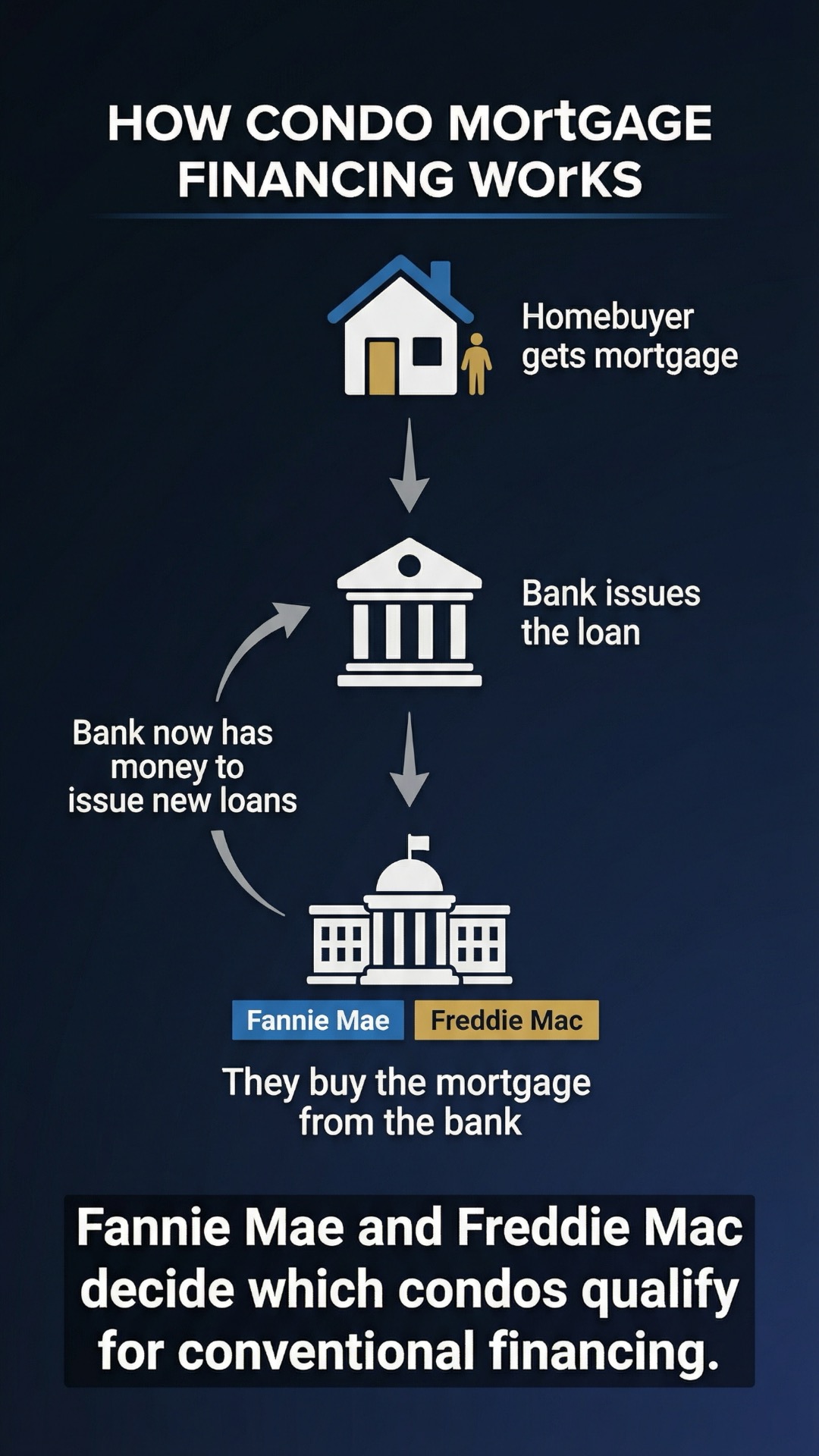
Let’s start out with what Fannie Mae and Freddie Mac do. Fannie Mae and Freddie Mac are government-backed entities that don’t lend money directly, but instead buy mortgages from banks, which allows banks to keep making new loans. By setting the rules for which loans they’ll buy, they effectively determine which condos and homes qualify for conventional financing nationwide.
So let’s talking about something that just came out from Fannie Mae and Freddie Mac, because there’s a lot of buzz out there saying this is going to “help” condo owners, and like most things in this area, that’s only part of the story.
Let’s start with the good news. They’ve relaxed some of the insurance requirements. And here in Florida, where insurance has become a nightmare, that actually matters. What that means in practical terms is that some condominiums that were previously blacklisted, meaning buyers couldn’t get conventional loans, may now become eligible again.
They also eliminated certain restrictions, like limits on how many units in a building can be rented. So again, that opens the door for more buyers to qualify for financing. And if buyers can get loans, that helps owners sell. So yes, there is some real benefit there.
But now let’s talk about what’s really going on behind the scenes. At the exact same time they relaxed those insurance rules, they tightened the financial requirements in a very serious way.
Going forward, associations are going to be expected to contribute at least 15% of their annual budget into reserves. That’s no longer a suggestion, that’s the baseline. So if your condo has a $1 million budget, you’re talking about a minimum of $150,000 a year going into reserves.
But here’s where it gets even more important. If your association has a reserve study, and it should—that study might say you need to be putting away more than that. Maybe $180,000, maybe $200,000. Under these new guidelines, lenders are going to expect you to follow the higher number, not the minimum. In other words, you don’t get to underfund reserves anymore and still qualify for financing.
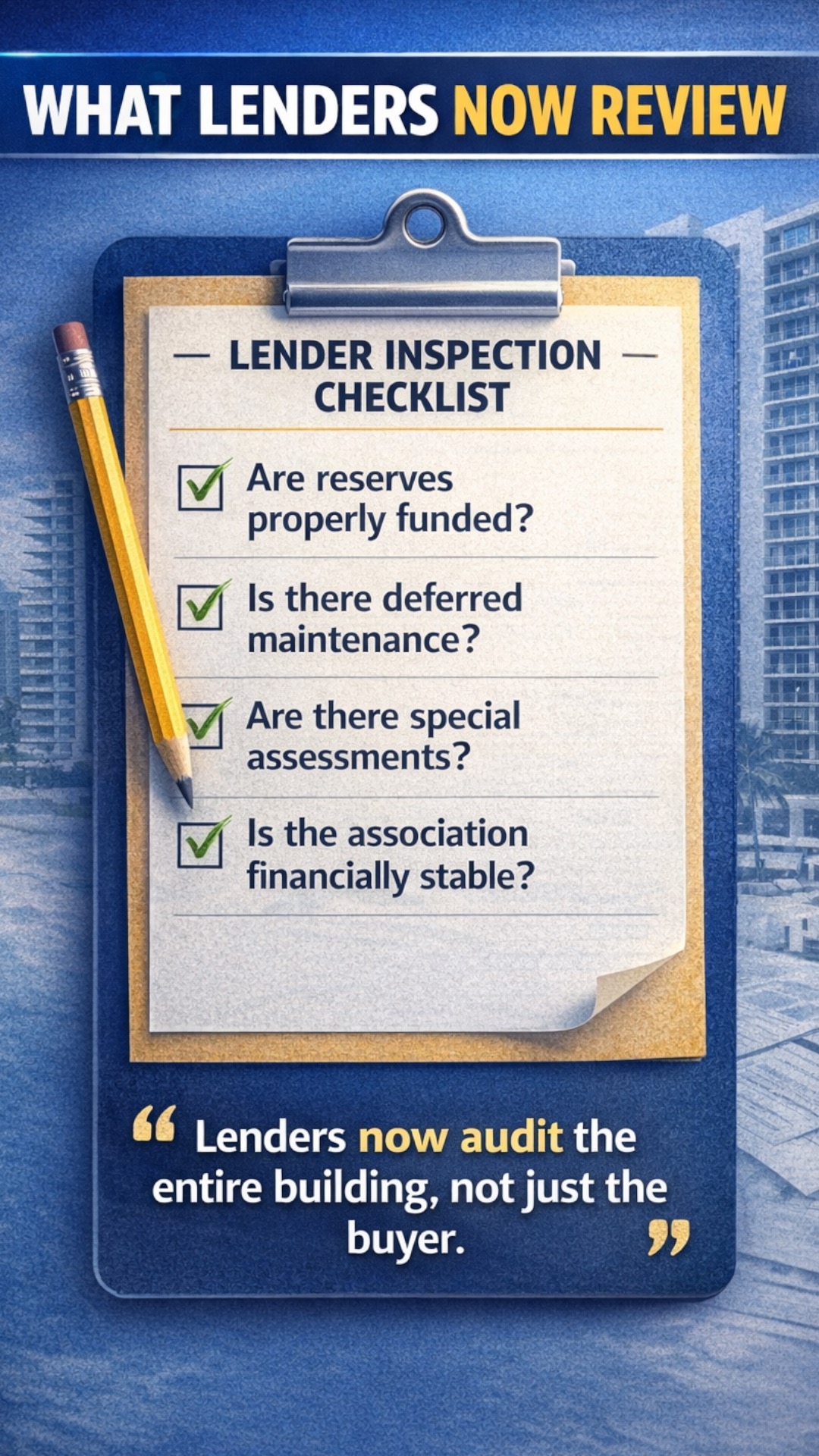
And that’s not all. Lenders are also eliminating what used to be called “limited reviews,” which were basically quicker, easier approvals. Now they’re going to take a much deeper dive into the association’s financial condition.
They’re going to look at:
Whether reserves are actually being funded
Whether the building has deferred maintenance
Whether there are special assessments
And whether the association is financially stable
So in plain English, Yes, they made it a little easier to get past the insurance hurdles.
But in exchange, they are now saying very clearly:
If your building is not financially healthy, we are not going to back loans in your community.
And that has real consequences. Because if buyers can’t get loans, units become harder to sell. And when that happens, property values are affected.
So what does this mean for boards and owners? It means many associations are going to have to make tough decisions:
Increase assessments
Properly fund reserves
Address long-deferred maintenance
And for buildings that have been kicking the can down the road for years, this is going to be a wake-up call.
So the bottom line is this: These new rules don’t really make things easier overall—they just shift the focus. Instead of disqualifying buildings over technical insurance issues, Fannie and Freddie are now focusing on what really matters—whether your condominium is financially sound and properly maintained.
And going forward, that’s going to determine whether your building is financeable…or not.